
2026-08-23 · Jason Wagner
Slab Leak Warning Signs Every Fairhope Homeowner Should Know
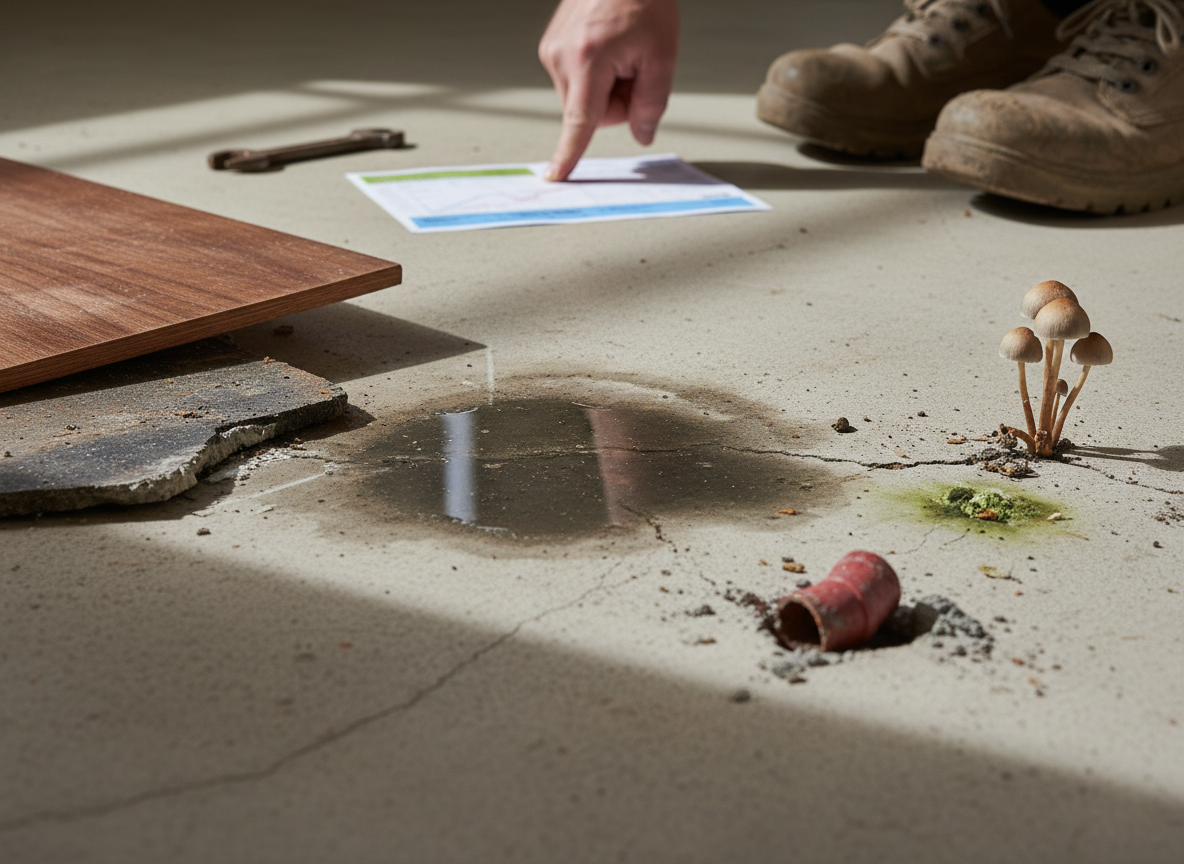
Fairhope homeowners notice slab leaks most often through sudden spikes in water usage, warm floors, or persistent damp spots that do not dry after bay breezes pass. These signs appear because many homes built on slabs in Baldwin County use copper or galvanized lines that corrode faster under constant moisture from the humid subtropical climate.
Rising Water Bills and Pressure Changes
A slab leak often shows up first on the monthly bill when usage jumps without added fixtures or people in the home. In neighborhoods such as Fly Creek and Point Clear, where many 1970s and 1980s slab homes sit close to Mobile Bay, the combination of salt-tinged air and high humidity speeds pipe corrosion. Owners may also feel lower water pressure at faucets while the meter keeps spinning. Checking the main shutoff valve for constant flow when all fixtures are off gives an early clue. If pressure drops steadily over weeks, the leak is likely under the slab rather than at a visible fixture. Tracking bills month to month against the same season the prior year helps separate normal summer irrigation from a hidden leak.
Damp Flooring and Musty Odors
Warm spots on tile or carpet and a persistent earthy smell point to water escaping beneath the slab. The humid subtropical air in Fairhope keeps soil moisture high year-round, so leaks do not evaporate quickly and mold grows along baseboards. Homeowners in Downtown Fairhope report these odors strongest after heavy rains when the water table rises. Pay attention to areas where the floor feels cooler than the rest of the room; that temperature difference signals moving water below. In Point Clear homes near the Eastern Shore Art Center, the same signs appear because older slabs lack modern vapor barriers. Opening windows for bay breezes rarely clears the smell when the source stays underground.
Cracks, Buckling, and Foundation Shifts
Visible cracks in tile grout or hardwood that widen over months often trace back to slab movement caused by escaping water. Baldwin County clay soils expand when wet and shrink when dry, so a steady leak underneath accelerates settling. Fairhope residents near the Fairhope Pier notice these cracks first in bathrooms and kitchens where pipes run closest to the slab edge. Doors that begin to stick or gaps forming between baseboards and flooring are later indicators. The same soil movement affects homes in nearby Foley and Daphne, yet the bay breezes here keep the ground damper longer and make the problem more common.
How Local Conditions Speed Slab Leaks
The humid subtropical climate with frequent bay breezes keeps relative humidity above 70 percent for much of the year, promoting condensation on pipes and faster external corrosion. Older slabs in Fairhope lack the thicker insulation used in newer construction, so temperature swings between day and night stress joints. Sandy soils near Fly Creek drain quickly after rain but still hold enough moisture against pipe walls to encourage pinhole leaks. Homeowners who irrigate regularly add extra water load to the soil, raising the chance that a small leak grows before it is noticed. These factors together mean slab leaks in Baldwin County often appear between 15 and 25 years after the original plumbing was installed.
Next Steps When Signs Appear
Turn off the main water valve and note the meter reading to confirm flow when nothing is in use. Avoid running large amounts of water until the source is located. Professional leak detection uses acoustic or camera equipment that avoids unnecessary slab removal. Once found, targeted water leak repair can often be completed with minimal floor disturbance. For homes in Fairhope showing multiple signs, a full inspection also checks nearby lines that may be affected by the same soil and moisture conditions. Early attention prevents larger foundation repairs later.